February 24, 2026
How winter-proof is the ARI 901 e-transporter?
Electric vehicles and winter - do they go together? For commercial vans in particular, the question of reliability, range and traction is crucial in the cold season. In this FAQ article, we answer the most important questions about the ARI 901 in winter use.
Is the ARI 901 generally suitable for winter use?
Yes, the ARI 901 is designed for year-round use and can also be operated at low temperatures without any problems. Like any electric vehicle, it reacts physically to the cold, but remains fully operational for city and regional journeys. For craft businesses, delivery services or municipal operations, this means that day-to-day work can be reliably planned even in winter.
How does the range change in winter?
In winter, the range is reduced by around 20 to 25 percent. This is partly due to the increased energy requirement for the interior heating and partly due to the temperature-dependent performance of the battery.
The official range of the ARI 901 is up to around 254 kilometers. In the cold season, a correspondingly more conservative calculation should be made. This difference is not a special feature of this model, but generally applies to all battery electric vehicles.
Does the ARI 901 have a battery heater?
The ARI 901 has a battery heater, which is particularly useful when starting the vehicle on cold days. While driving, the battery also warms up during operation. This stabilizes the performance in everyday use.
It is not technically possible to fully compensate for physical cold effects, but the systems ensure practical winter operation.
Is there a solution to reduce range loss?
The ARI 901 can be optionally equipped with a methanol heater. This generates heat independently of the high-voltage battery and thus significantly reduces the electrical energy consumption for the interior heating.
This option can be particularly useful for frequent short trips or continuous use at low temperatures, as it protects the battery and keeps the range more stable.
How does the ARI 901 behave on snow and ice?
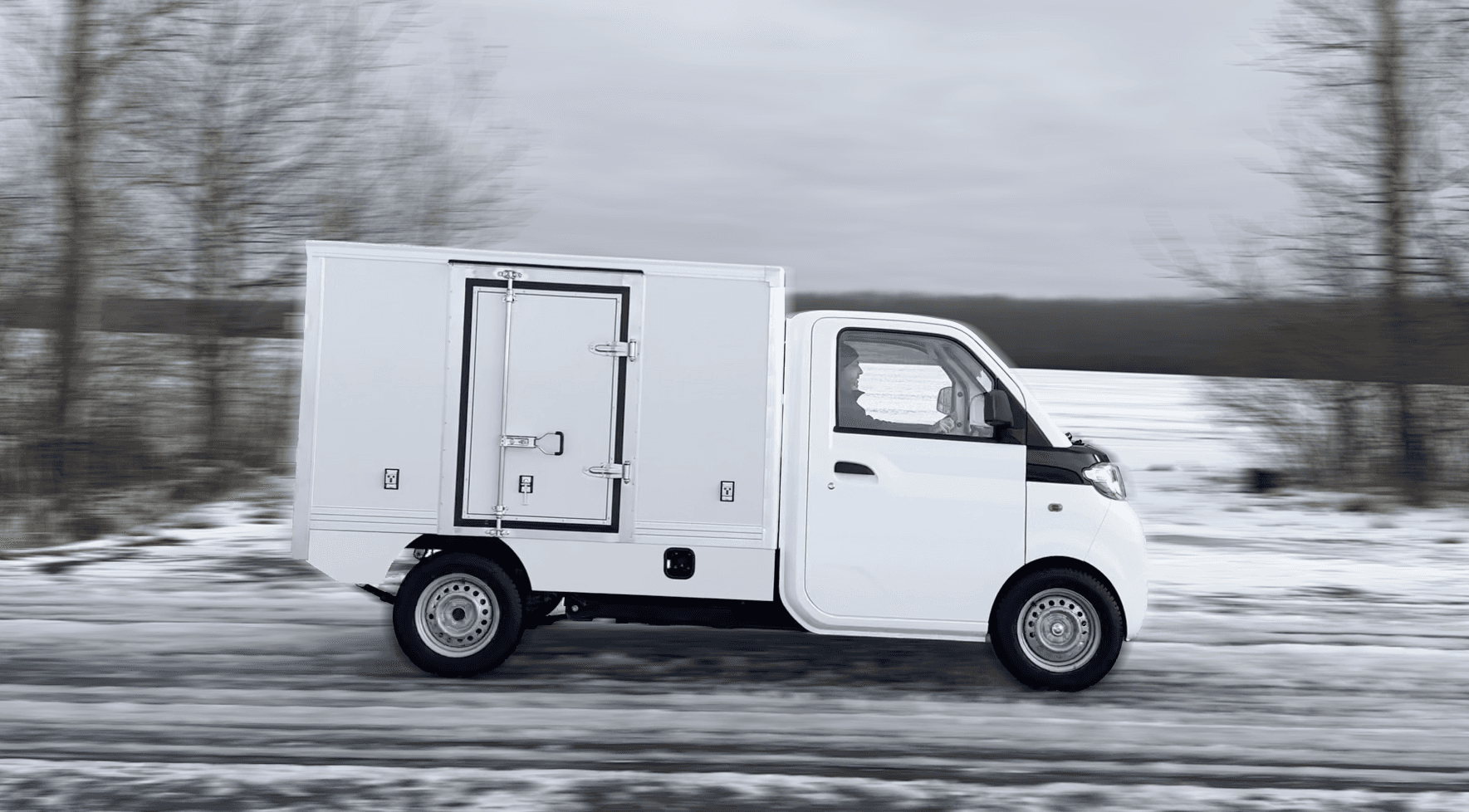
The ARI 901 is equipped with rear-wheel drive. This ensures direct power transmission, but requires an adapted driving style in winter - especially when unloaded. Traction on the rear axle improves noticeably with a load.
In combination with suitable winter tires and, if necessary, snow chains, the vehicle remains safely controllable even on slippery surfaces. For commercial users, we recommend converting to winter tires at an early stage.
Is the ARI 901 suitable for construction, trade and municipal applications in winter?
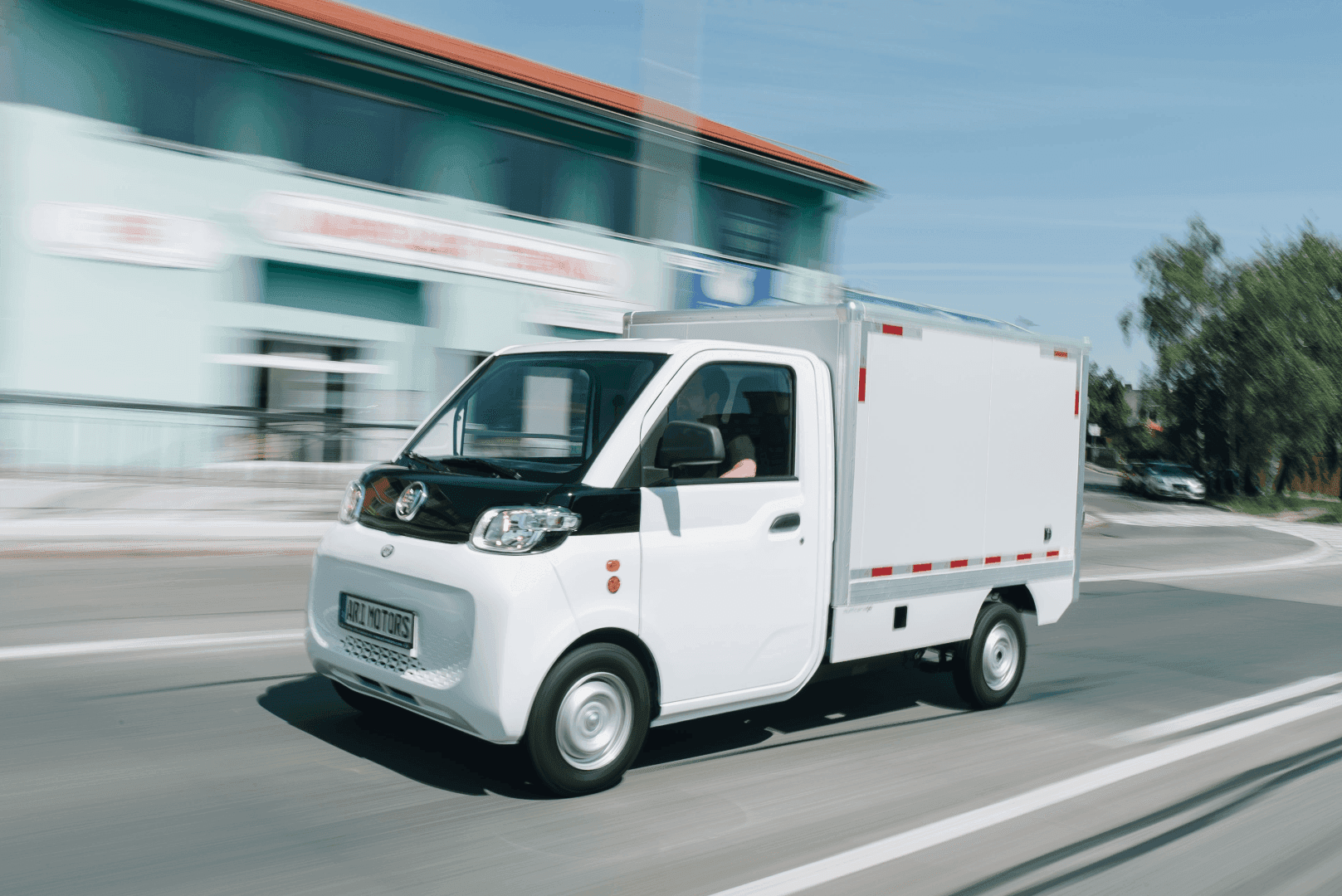
Thanks to its different body variants - from panel van, flatbed and tipper to refrigerated box body or platform chassis - the ARI 901 can be flexibly adapted to different areas of application.
This makes the vehicle suitable for sectors that work continuously even in winter, such as the construction industry, municipal services or delivery logistics.
Conclusion: Is the ARI 901 worthwhile as an e-transporter in winter?
The ARI 901 is clearly suitable for use in winter and for commercial use all year round. Although a reduced range must be expected, this is calculable and customary in the industry.
With realistic usage profiles, suitable tires and optional methanol heating, the van offers a solid solution for companies that want to rely on electric mobility even in the cold season.
You might also be interested in