February 24, 2026
Autonomous delivery vehicles: what options are available today?
Autonomous delivery is considered one of the most important future trends in urban logistics. Rising delivery volumes, a shortage of skilled workers, increasing sustainability requirements and growing online trade are putting traditional delivery concepts under increasing pressure. Autonomous delivery vehicles promise new solutions here: efficient, emission-free and scalable. But what can autonomous delivery look like in practice?
Autonomous delivery robots on sidewalks - the example of REWE
One of the best-known forms of autonomous delivery are small delivery robots that move independently on sidewalks. One prominent example is REWE's autonomous delivery robot, which is being used in several German cities as part of pilot projects.
These delivery robots transport small purchases from the supermarket directly to customers in the immediate vicinity. They are electrically powered and move at low speed, navigate using cameras, sensors and artificial intelligence and are specially designed for short distances.
The advantage of this concept lies in its high energy efficiency, zero emissions and low operating costs. At the same time, there are clear limits: Transport capacity is limited, ranges are manageable and use is restricted primarily to residential areas with well-developed infrastructure. This model is only suitable to a limited extent for larger delivery volumes or multiple stops.
Autonomous delivery vehicles and vans - example ID. Buzz
Another important development direction is autonomous delivery vehicles based on classic vans. One well-known example is the autonomous ID. Buzz, which was developed as an electric delivery van for use in urban traffic.
In contrast to small delivery robots, an autonomous van can bundle several delivery stops and transport significantly larger quantities of goods. These vehicles drive on public roads, have to cope with complex traffic situations and are equipped with extensive sensor technology.
Autonomous e-vans such as the ID. Buzz are particularly suitable for use on the last mile in cities and suburbs. They can almost completely replace existing delivery processes and offer great potential for making inner-city delivery traffic quieter, cleaner and more efficient.
Specialized autonomous delivery vehicles - example Nuro 3
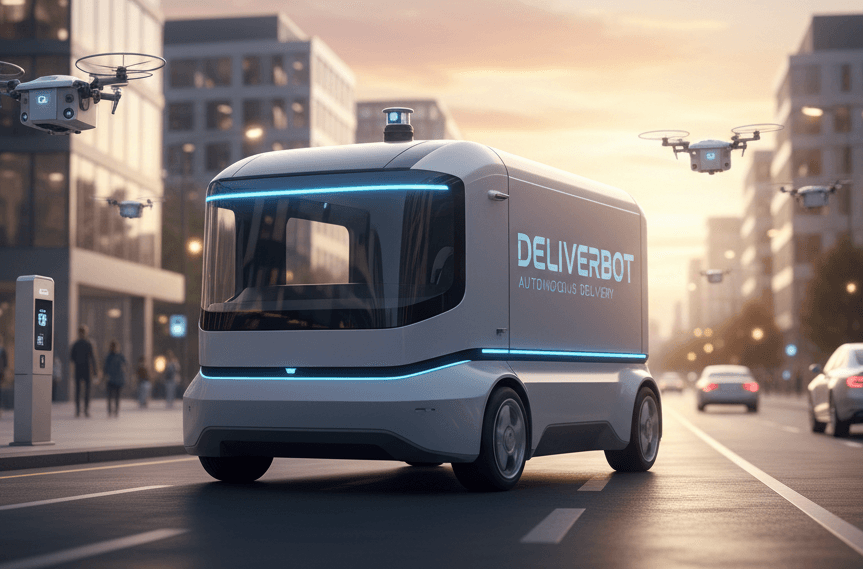
A new vehicle class is establishing itself between classic delivery vans and small sidewalk robots: specially developed autonomous delivery vehicles without a driver's seat. A well-known example of this is the Nuro 3.
The Nuro 3 is designed entirely for transporting goods, is electrically powered and is more compact than a conventional delivery van. It deliberately dispenses with an interior for the driver or passengers and uses the space gained exclusively for freight.
These vehicles are particularly interesting for delivery services, retailers and logistics companies that operate regular routes with clearly defined areas of operation. They combine higher transport capacity with a smaller space requirement in road traffic and lower operating costs compared to classic vans.
Inexpensive autonomous delivery vehicles - the example of Faction (USA)
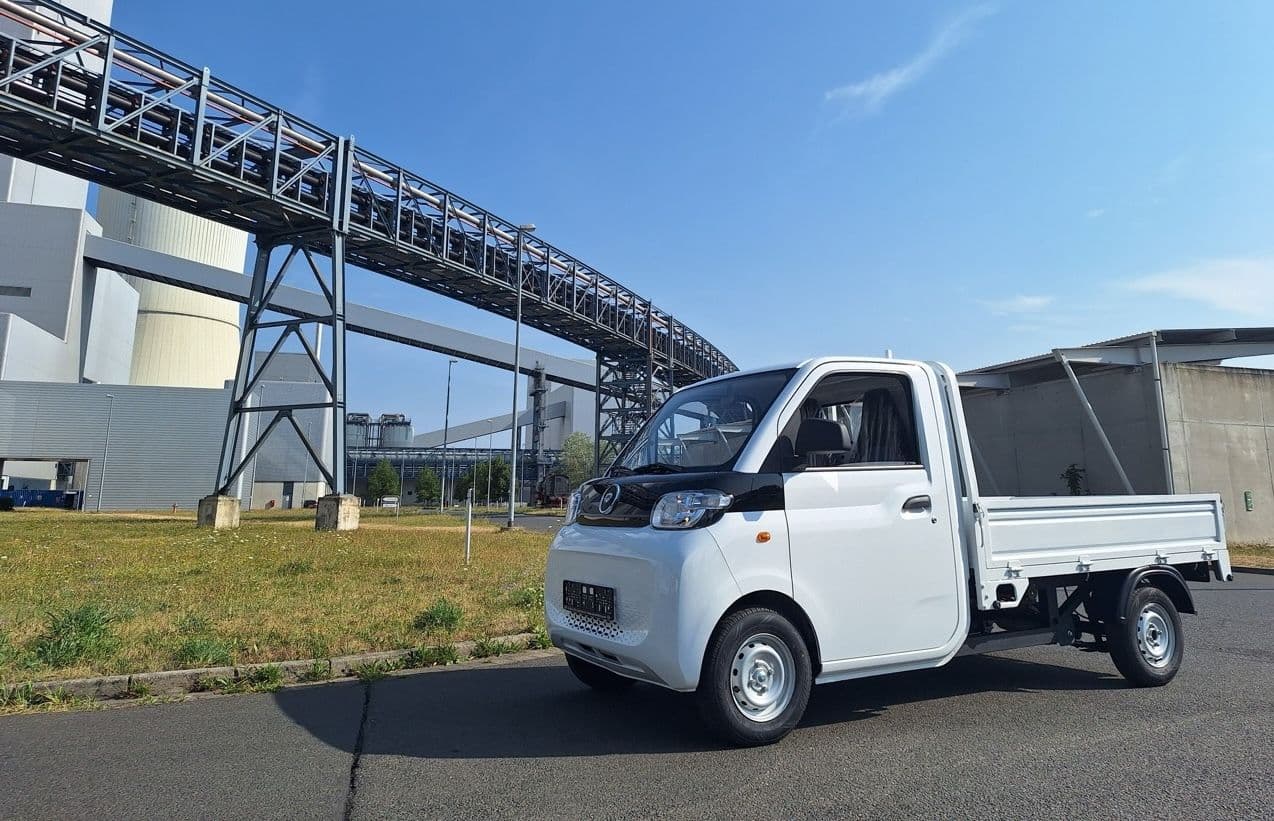
The US company Faction is pursuing a particularly practical approach. Faction relies on affordable, compact electric vehicles that have been specially developed for autonomous delivery tasks. The aim is to make autonomous mobility economically scalable.
Faction's vehicles are significantly smaller than conventional vans, require less energy and can be produced cost-effectively. At the same time, they are designed for use in regular road traffic and can reach higher speeds than sidewalk robots.
A central element of the Faction concept is the supervised driverless model: the vehicles drive autonomously, but are monitored remotely and can be assisted or controlled by humans if necessary. This model is currently considered to be particularly realistic, as it combines safety, economic efficiency and regulatory requirements.
Supervised driverless as the preferred solution
The examples show that there is no single autonomous delivery solution. Rather, there are different concepts for different purposes - from delivery robots on the sidewalk to autonomous delivery vans and specially developed, low-cost delivery vehicles.
The supervised driverless model in particular is currently gaining ground. It enables the practical use of autonomous delivery vehicles today, without having to wait for fully driverless systems.
ARI Motors is consistently pursuing this approach and is expanding its partnership with Faction. The aim is to combine affordable electric commercial vehicles with supervised autonomous driving technology and create marketable solutions for urban logistics, trade and commerce.
You might also be interested in