November 2, 2026
What does the term "BMS" mean?
In short: The BMS (Battery Management System) is the control center for the battery in your electric vehicle and uses sensors, control units, and software to monitor the current flow, temperature, and voltage of each individual cell. This protects the battery from overcharging, deep discharge, and overheating, thereby extending its service life. In the LiFePO4 batteries used in ARI electric vehicles, a BMS also ensures that every cell operates within a safe range.
Have you ever wondered what this mysterious “BMS” is that’s often mentioned in connection with electric cars? Well, let’s take a look at it together and examine this important component more closely.
What does BMS stand for?
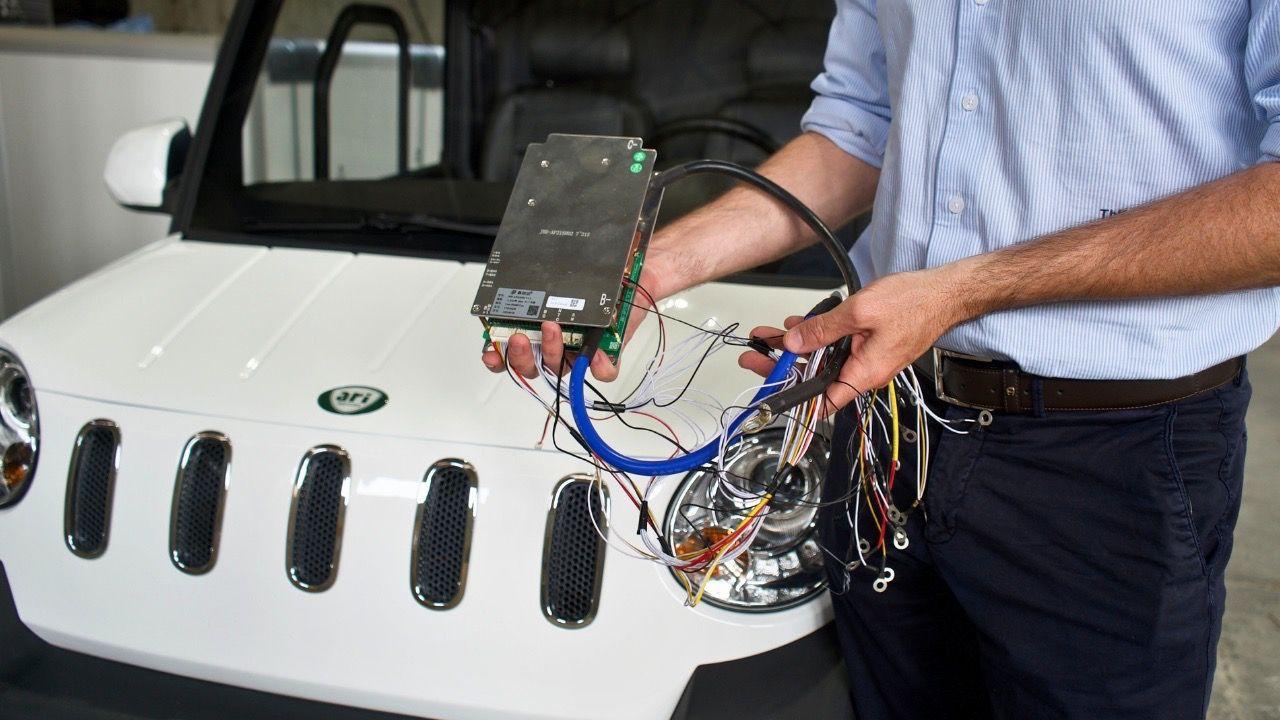
BMS stands for Battery Management System and is an essential component in electric vehicles. Think of it simply as a kind of guardian for your battery that constantly interacts with your electric car.
Consisting of a variety of sensors, control units, and software, it monitors and optimizes the battery’s condition, ensuring that it remains intact and performs at its best for as long as possible.
What are the functions of the BMS?
The main functions of a Battery Management System are:
- Monitoring the flow of current
The BMS regulates how much current flows into and out of the battery. For example, when you accelerate, the BMS releases more energy to the battery. When braking in regenerative mode, it ensures that the recovered energy is stored efficiently. This prevents the battery from being overloaded and optimizes the vehicle’s energy consumption.
- Monitoring temperature
The BMS also monitors the battery’s temperature and ensures it remains at an optimal level at all times. If it’s cold outside, the BMS turns on the battery heater. If it’s too warm, it cools the battery down. This prevents the battery from overheating or cooling down too much, ensuring it operates safely and efficiently at all times.
- Cell Balancing
To optimize the battery’s service life, the BMS also manages the balancing of the battery cells. To do this, it monitors the voltage of each individual cell and ensures that no cell is overcharged or over-discharged. This ensures that all cells are charged evenly and that the battery maintains a balanced voltage.
Why is the BMS so important?
A battery management system (BMS) is very important for electric vehicles for several reasons:
- Safety
By monitoring and regulating the battery’s condition, the BMS protects it from potentially dangerous situations such as overcharging, overheating, deep discharge, or short circuits. In this way, it helps prevent accidents or fires that could be caused by suboptimal conditions.
- Extending Battery Life
By precisely monitoring and controlling the charging and discharging processes, the BMS can extend the battery’s lifespan. It prevents the battery from being damaged and protects it from premature aging and loss of performance.
- Optimizing Performance
By adjusting the current output to the motor’s requirements, the BMS maximizes energy flow and thus optimizes the battery’s performance.
- Range Information
Since it constantly monitors energy consumption and remaining battery capacity, the BMS is able to provide the driver with precise information about the remaining range. This ensures that the driver is always informed about the current battery status and can plan charging stops in a timely manner.
Overall, the BMS is an indispensable component for electric vehicles that optimizes safety, performance, battery life, and range, thereby contributing significantly to the vehicle’s functionality and reliability.
You might also be interested in