September 23, 2026
Quiet utility vehicles for campgrounds, vacation parks, and recreational facilities
It’s just past seven at the campground. The first guests are sitting outside their awnings with coffee, while families are still asleep in the rental chalets. Right now, the campground staff’s workday is just beginning: emptying trash cans, delivering bread rolls to the front desk, and driving tools to the broken power distribution box. If they use a diesel vehicle, half the row of campsites will hear it. If they use an electric site vehicle, hardly anyone will notice.
For operators of campgrounds, vacation parks, and recreational facilities, peace and quiet is part of the product. Anyone who sells relaxation to their guests should organize their own logistics so that they don’t disturb the experience. ARI Motors offers three electric utility vehicles in different size classes for this purpose: the ARI 345 cargo scooter, the ARI 458 Pro electric van, and the ARI 901 electric van. All three are available with a wide range of body styles and can thus be tailored specifically to the tasks on the premises.
Why Vehicles at Recreational Facilities Should Be Quiet
At a campground, work routes and recreational areas are right next to each other. There are often only a few meters between a tent and a driveway, and a tent canvas barely dampens any noise. Many campground rules also stipulate quiet hours during the day and at night, which the staff themselves must, of course, also observe. At the same time, many tasks cannot be postponed at will: trash must be removed before the heat of the day sets in, and fresh linens must be in the vacation home before guests arrive.
Electric utility vehicles largely resolve this conflict. Without an internal combustion engine, driving primarily produces rolling and wind noise, which is minimal at the low speeds typical on campground grounds. In addition, no exhaust fumes are produced on-site. This is a real advantage in areas where guests eat outdoors, children play, and vehicles move slowly between campsites.
There’s one thing you should keep in mind: Because electric vehicles are so quiet, pedestrians notice them later. At resorts with many children, it’s therefore advisable to have a clear rule requiring walking speed and attentive driving.
Three Vehicle Classes for Different Facilities
The three models cover a wide range of needs. The ARI 345 is a three-wheeled cargo scooter designed for narrow paths and smaller loads. The ARI 458 Pro is a compact light commercial vehicle in the L7e class and the most versatile model for daily on-site operations. The ARI 901 belongs to the N1 class and is the choice for large facilities, heavy loads, and regular off-site trips.
ARI 345: The cargo scooter for narrow paths and short routes
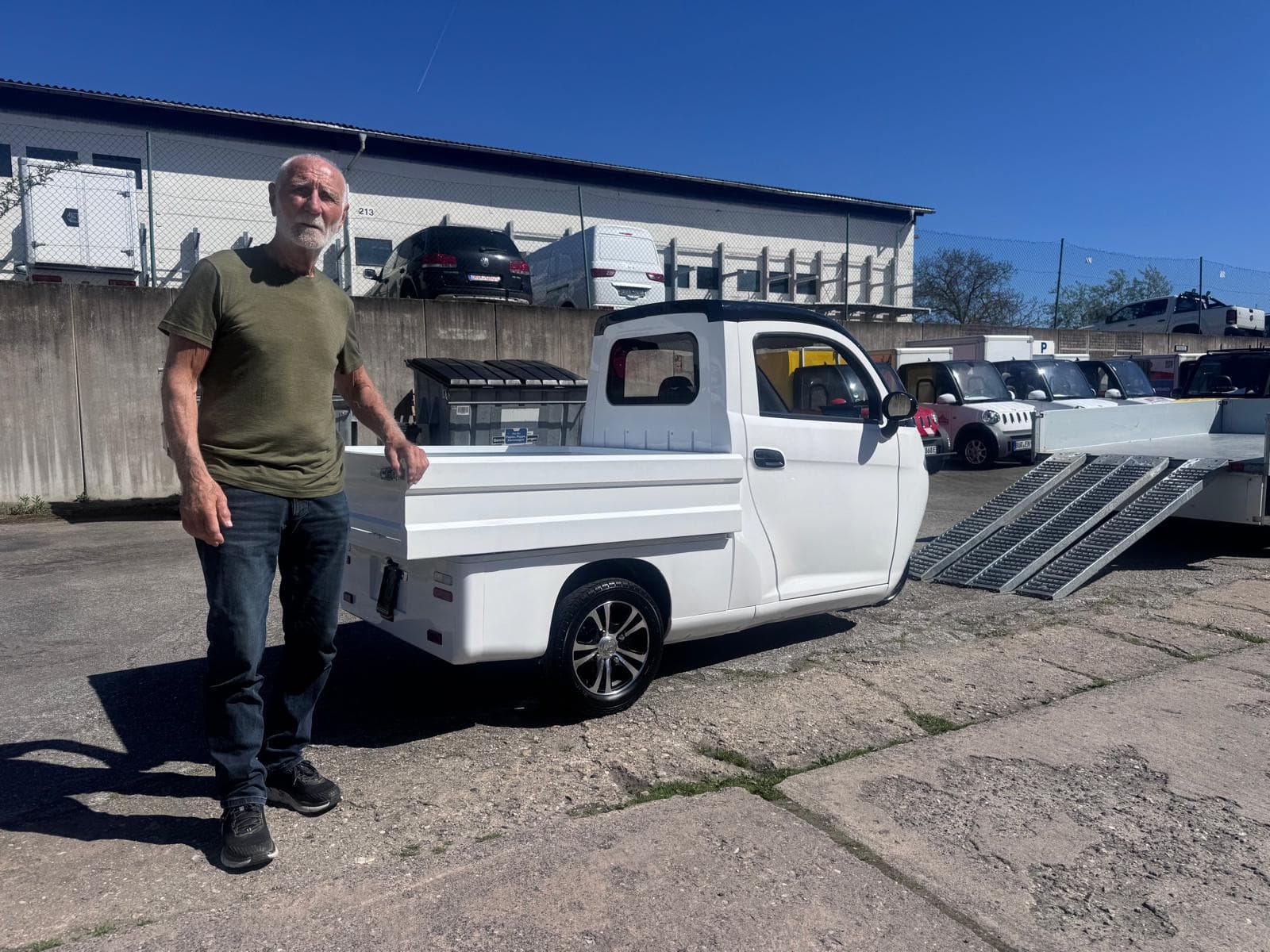
The ARI 345 really shines where paths are narrow and curves are tight. This cargo scooter can carry up to 325 kg of payload and has a top speed of 45 km/h, which is more than sufficient for on-site use. It can be driven by anyone 15 years of age or older with a Class AM moped license. For businesses that hire seasonal workers, this expands the pool of employees who can use the vehicle.
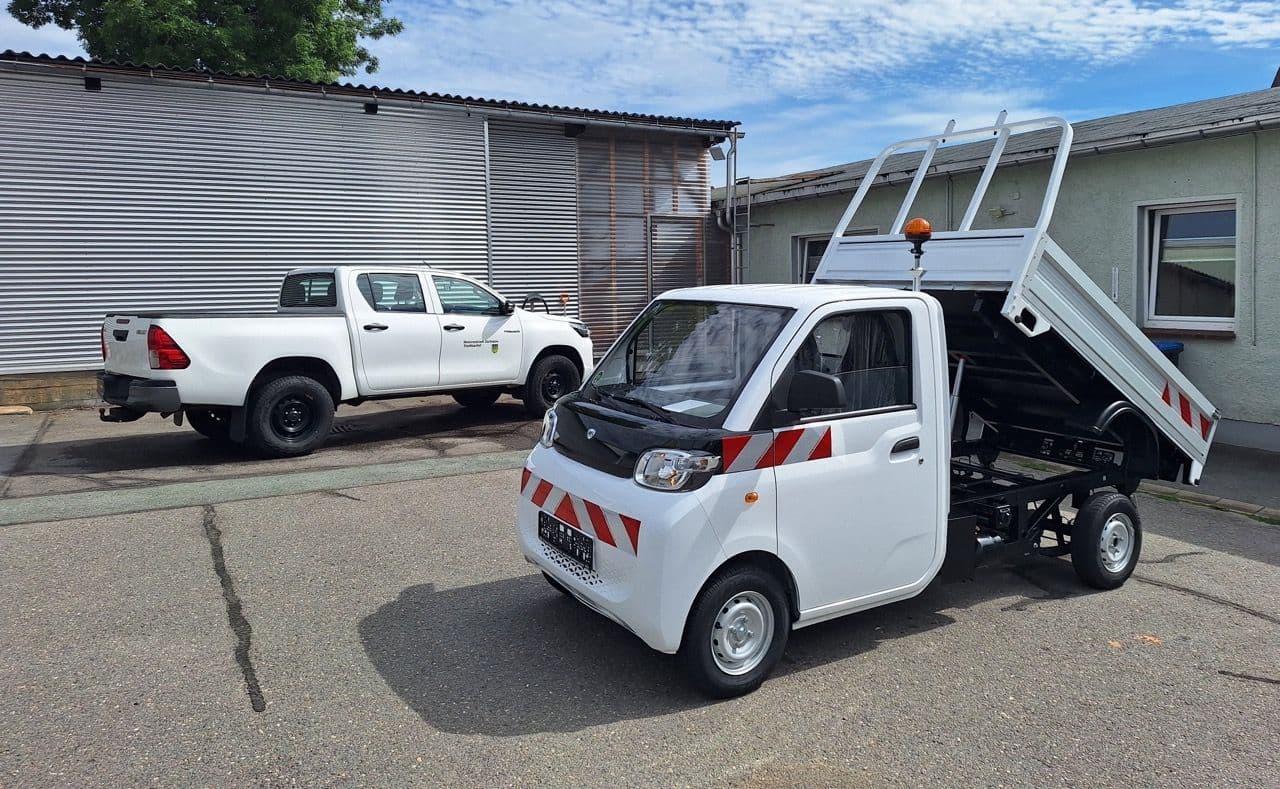
The variety of body options is remarkable for a vehicle of this size. The manually tilting flatbed is available in three sizes with up to approximately 1.8 m² of loading area, and can be equipped with a tarp or leaf guard upon request. This allows the landscaping team to transport grass clippings, leaves, and gardening tools and dump the load directly at the collection point. The box body, available in three sizes, offers up to 1.9 m³ of cargo volume and keeps laundry bags, cleaning supplies, or spare parts dry and clean. As a sales vehicle or food truck, the ARI 345 becomes a mobile bakery, ice cream, or beverage stand that makes the rounds of parking lots in the morning or sets up shop at the lake.
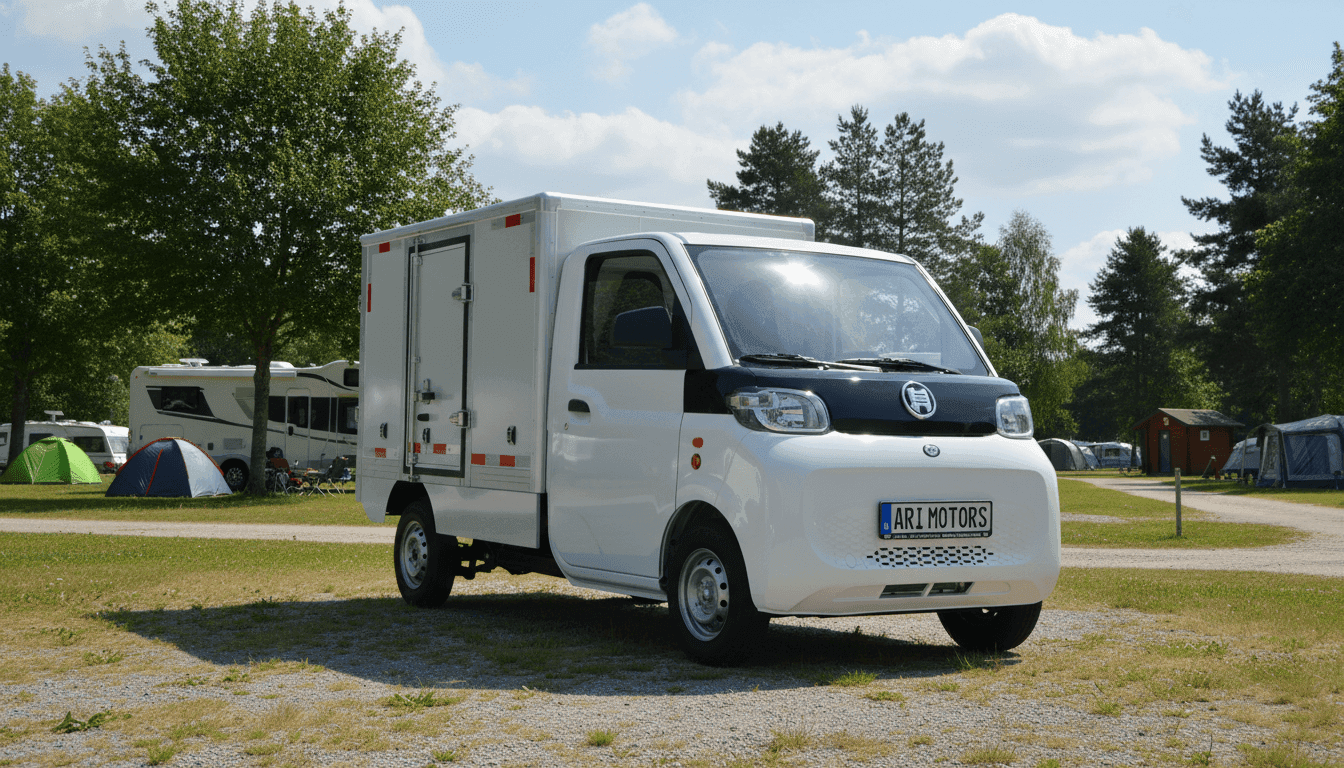
The ARI 345 Cab with an enclosed driver’s cab is available as a box truck, flatbed, sales vehicle, or food truck. It has a range of about 100 kilometers with the standard LiFePO4 battery and up to 180 kilometers with the optional 12-kWh battery. That’s more than enough for daily trips around a campground.
ARI 458 Pro: The All-Rounder with Over 30 Body Variants
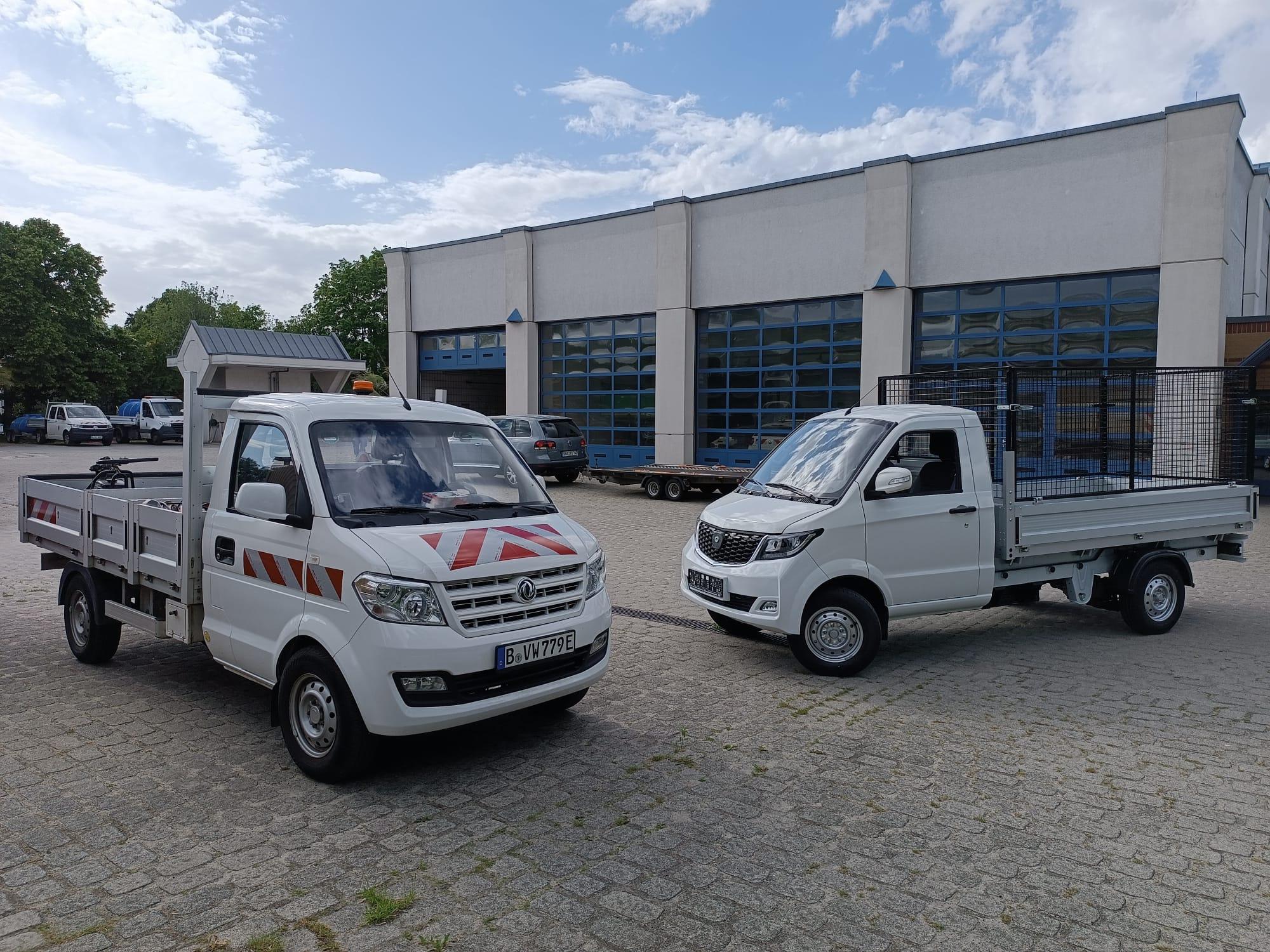
The ARI 458 Pro is the vehicle that can handle the widest range of tasks at recreational facilities. It carries a payload of up to 850 kg, reaches speeds of up to 71 km/h, and remains compact enough to navigate even the most winding terrain with ease. The body styles are available in three sizes: Standard, L, and XL. In total, there are over 30 body style options to choose from.
The box body is particularly appealing for vacation parks with rental accommodations. It offers up to 5.58 m³ of cargo volume and is also available in an alcove version with additional storage space. Additional doors or roll-up doors make loading and unloading easier when moving linens, towels, and cleaning supplies from house to house on changeover days. The standard version can already accommodate two Euro pallets, for example, for beverage deliveries to a kiosk or beach bar.
For outdoor facilities, the flatbed with a leaf guard or tarp, as well as the dump truck, are ideal. Grass clippings, wood chips, sand for the playground, or paving stones for path repairs can be transported without the need for reloading. With the waste collection body, the ARI 458 Pro handles the daily waste collection route. Facilities operating year-round can also have the vehicle equipped as a winter service vehicle, ensuring that paths and parking lots remain safe even during the cold season.
Those who operate a restaurant, a farm stand, or a fresh produce counter on the premises will find suitable solutions in the refrigerated vehicle, the sales vehicle, or the food truck. A food truck parked at an event venue in the evening operates without a running generator—and thus without the hum and exhaust fumes near the seating areas.
Charging is also convenient for on-site operations. The ARI 458 Pro charges from a standard 230-volt outlet; a wallbox is not required. A full charge takes about four to five hours, depending on the battery and its charge level, so the vehicle is fully ready to go again in the morning. The standard LiFePO4 battery provides a range of 120 to 180 kilometers, while the larger battery offers a range of 180 to 230 kilometers. Optional features include air conditioning, a trailer hitch, and solar panels on the box body.
By the way: Based on the ARI 458 Pro, there is now also a camper van available for DIY conversion. This makes the vehicle not only ideal for work at the campground but also for the guests who arrive there.
ARI 901: More Payload Capacity for Large Facilities
Large vacation parks and sprawling recreational facilities often have transportation needs that extend beyond the grounds. Bulk purchases from beverage suppliers, trips to the recycling center, or transporting furniture between multiple locations all require a higher payload and faster speeds. This is where the ARI 901 comes in.
This N1-class electric van has a payload capacity of approximately 900 kg and reaches speeds of up to 100 km/h. With an optional trailer hitch, it can also tow loads of up to 900 kg, such as a mower trailer or event equipment. It is available as a panel van, flatbed, dump truck, with a box body, sales body, or waste collection body.
The box body is available in three sizes with a cargo volume of up to 7.6 m³, making it ideal for laundry pickups at large facilities with many accommodations. The waste collection body holds up to 5,000 liters and is available in fixed or tipper configurations. For teams traveling together to the job site, the ARI 901 is optionally available with a double cab and up to five seats. This allows a single vehicle to transport the entire grounds maintenance crew and their equipment in one trip to the other end of the park.
Which vehicle is right for which facility?
| Model | Vehicle class and driver's license | Payload | Maximum speed | Typical tasks at the facility |
|---|---|---|---|---|
| ARI 345 | L2e, class AM (from age 15) | 325 kg | 45 km/h | Small waste collection routes, tool transport, mobile sales on narrow paths |
| ARI 458 Pro | L7e, class B | Up to 850 kg | 71 km/h | Linen changes, grounds maintenance, waste disposal, winter service, catering |
| ARI 901 | N1, class B | Approx. 900 kg | 100 km/h | Large facilities, off-site trips, crew transport, heavy loads |
Small campgrounds with narrow paths often find the ARI 345 sufficient. For most medium-sized facilities, the ARI 458 Pro is the ideal work vehicle because it can carry heavy loads while remaining highly maneuverable. Vacation parks with many accommodations, multiple locations, or regular trips on public roads benefit from the ARI 901. In practice, many operators combine two vehicles—for example, a maneuverable vehicle for daily rounds and a larger one for heavy hauls.
Charging, Maintenance, and Costs
Electricity is readily available throughout recreational facilities anyway, so a dedicated charging infrastructure can usually be set up quickly. Those who charge the vehicle overnight at the depot using their own photovoltaic system can further reduce energy costs. Electric powertrains also do not require oil changes, timing belts, or exhaust systems, which reduces maintenance costs compared to internal combustion engines.
For commercial buyers, the special depreciation allowance for electric vehicles may be of interest; in Germany, this allows for a 75 percent depreciation in the year of purchase through the end of 2027. It’s best to consult your tax advisor to determine whether and to what extent your vehicle qualifies for this benefit. Information on the GHG quota can be found at ari-motors.thg-quoten.de.
Frequently Asked Questions About Electric Utility Vehicles for Campgrounds and Vacation Parks
How quiet are electric utility vehicles on the premises?
Electric utility vehicles do not have an internal combustion engine that produces noise while driving or idling. Given the low speeds on campgrounds and in vacation parks, the main sound you’ll hear is quiet rolling noise. This means that work carried out in the early morning hours disturbs guests significantly less.
Which ARI vehicle is suitable for changing linens in vacation homes?
A box body is ideal for transporting bedding and cleaning supplies. The ARI 458 Pro offers up to 5.58 m³ of cargo volume, while the ARI 901 with a box body offers up to 7.6 m³. For smaller facilities, the ARI 345 box body with up to 1.9 m³ is often sufficient.
Do I need a driver’s license to operate these vehicles?
For the ARI 345, a Class AM moped license—which can be obtained as early as age 15—is sufficient. For the ARI 458 Pro and the ARI 901, a Class B driver’s license is required.
How is an ARI 458 Pro charged at a campground?
The ARI 458 Pro charges from a standard 230-volt outlet. A wallbox is not required. A full charge takes about four to five hours, depending on the battery and its charge level, so the vehicle can be conveniently charged overnight.
Can an ARI vehicle also be used on the campground in winter?
Yes. The ARI 458 Pro is available, among other configurations, as a winter service vehicle. Winter tires are also available as an accessory for year-round operation.
Find the Right Vehicle for Your Facility
Every recreational facility has different paths, different loads, and different workflows. The best way to determine which combination of vehicle, body, and body size suits your operation is through a direct consultation. You can find an overview of all vehicles for your industry on our page about electric vehicles for campgrounds and vacation resorts. The ARI Motors team will be happy to advise you on your selection.
You might also be interested in