September 8, 2026
Ratsch-Mobil Bad Windsheim: How an ARI 345 Brings the Church to the Market Square
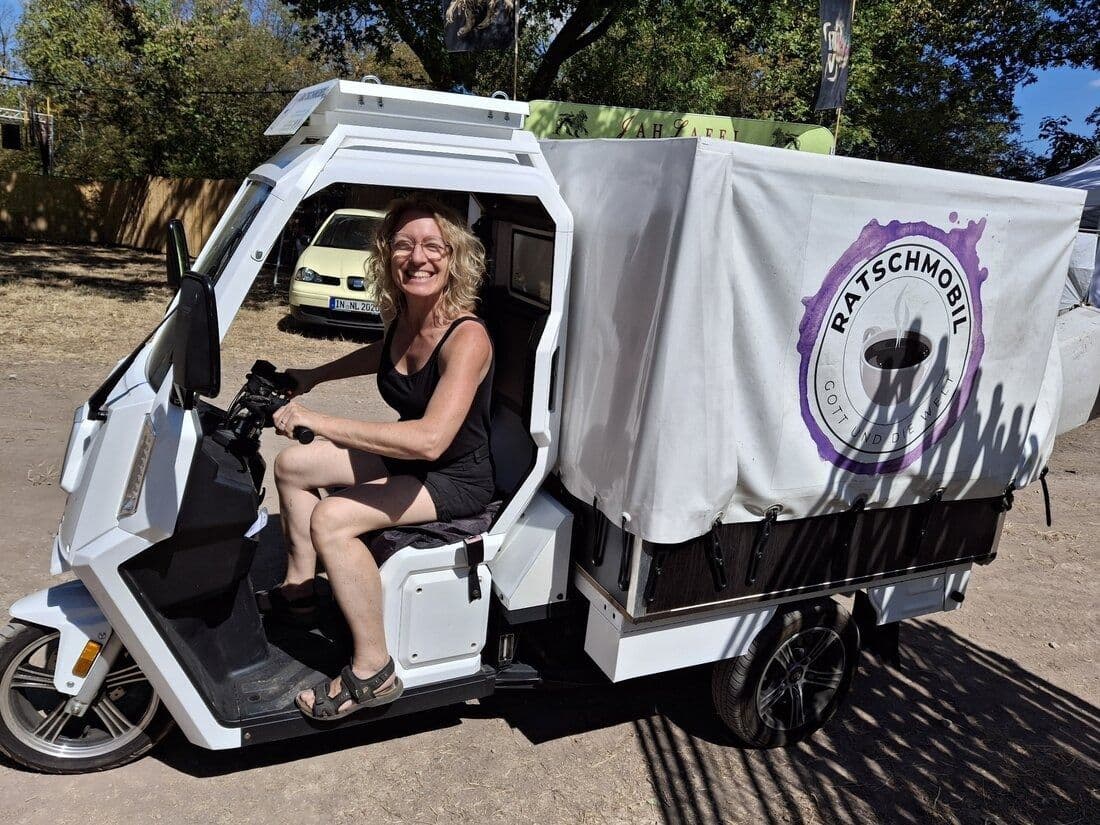
Thursday morning at the market square in Bad Windsheim: Among the market stalls stands a three-wheeled electric vehicle with a canvas canopy, next to it folding chairs and a pot of coffee. Anyone who wants to can stop by and strike up a conversation. The vehicle is called the Ratsch-Mobil, and it’s based on an ARI 345.
It is operated by the Evangelical Lutheran Deanery of Bad Windsheim. The idea behind it: The church doesn’t wait for people to come to a building, but goes where they already are. In the Franconian dialect, “chatting” is simply called “ratschen.”
From Idea to Vehicle
The project was initiated by Gerhard Beck, who has served as the deanery’s representative for parish outreach and missionary services since March 2021. At a pastors’ conference in January 2022, he learned about a similar concept from Herzogenaurach: an electrically assisted bicycle trailer serving as a mobile café. Their original plan for a cargo trailer couldn’t be implemented, so they opted for a standalone vehicle instead. In September 2023, the ARI 345 with a tarpaulin-covered body arrived in Bad Windsheim. Looking back, the deanery explicitly considers this solution to be the better one.
Approximately 80 percent of the purchase was financed through the MUT initiative of the Evangelical Lutheran Church in Bavaria. This was supplemented by grants from the city of Bad Windsheim and the district’s climate fund, which specifically promotes electric mobility.
Why a cargo scooter and not a van
A traditional van would have been too large a vehicle. What was needed was something that could fit between market stalls, operate quietly and with zero local emissions, and align with the project’s mission.
The ARI 345 has a top speed of 45 km/h and can be driven with a Class AM moped license, meaning it’s available to riders as young as 15. Thanks to the cab roof and three-point seatbelt, helmets are not required—which makes a significant difference for a volunteer team made up of people of various ages. The payload capacity of approximately 325 kilograms is sufficient for beverages, dishes, seating, and supplies for an entire day of operations.
The tarp cover protects the equipment while on the road and can be opened in just a few simple steps once at the scene. The vehicle has been equipped with a roof rack featuring a nameplate, and the side panels serve as a moving billboard for church services and events.
One Vehicle, Many Locations
A regular stop is the weekly market, Thursdays from 9 a.m. to 12 p.m. When the market square was unavailable due to construction, the team moved to Klosterplatz. In addition, there are events throughout the year: the Old Town Festival, including a parade; several days at the Weinturm Festival; a midday stage of the BR-Radl-Tour in Obernzenn with around a thousand participants; open-air church services in the spa park; a sunset blessing at the Kochsweiher; village flea markets, and the Ezerdla Dialect Festival in Burgbernheim. The organizational effort involved remains minimal. The ARI 345 pulls up, the tarp opens, and the coffee’s brewing.
Day-to-Day Operations
The Ratsch-Mobil operates seasonally from around March through November. In winter, it is stored in a sheltered location and recharged regularly so that the batteries can withstand the cold season. According to the team, the first inspection went off without a hitch. Operating costs also remain manageable: L2e-class vehicles are inexpensive to insure, and energy costs—at an electricity price of 30 cents per kilowatt-hour—amount to about 1.70 euros per 100 kilometers.
What Other Organizations Can Learn From This
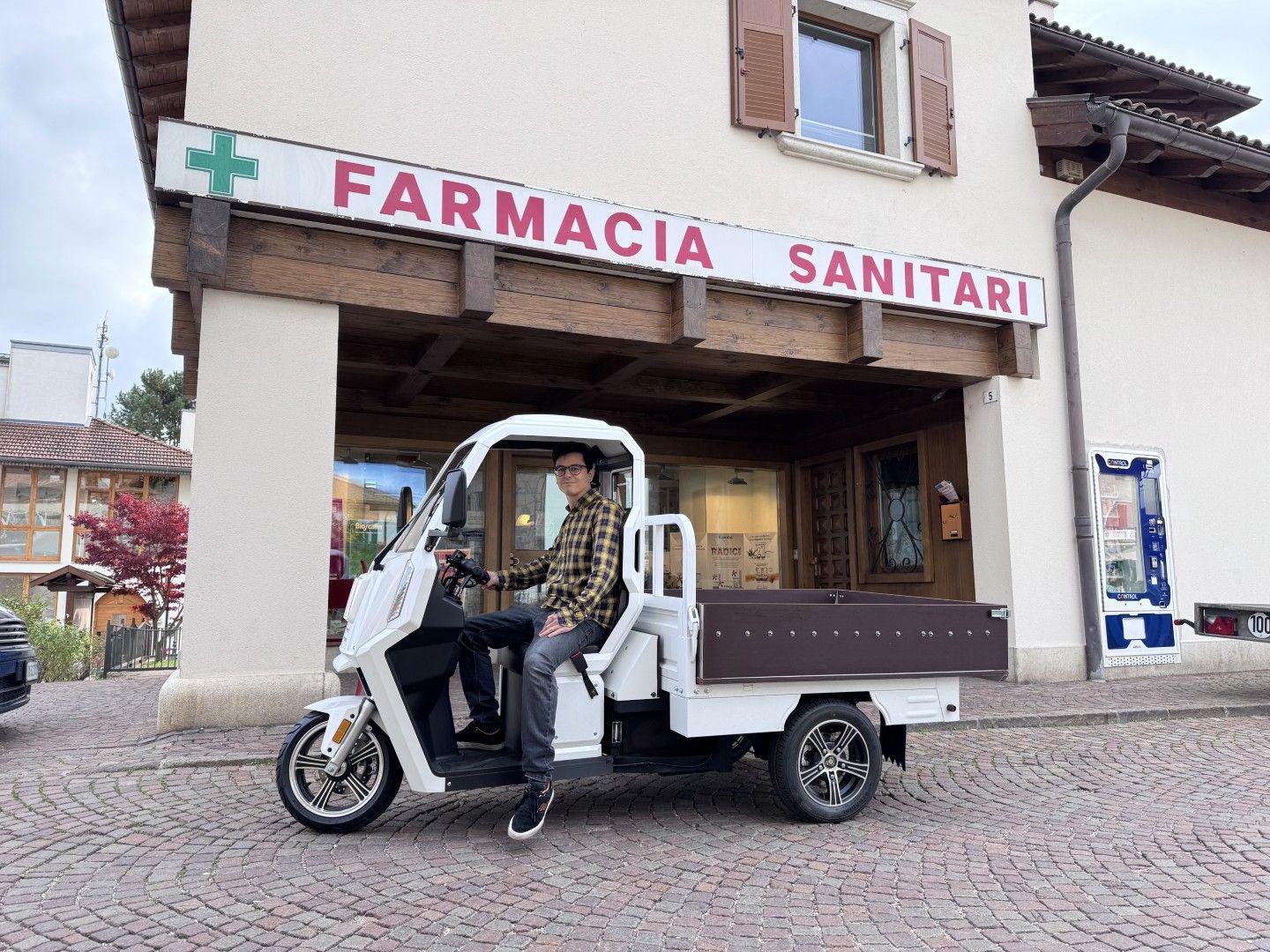
For church congregations, clubs, neighborhood initiatives, and municipal organizations, three points are particularly relevant. First, the driver’s license: A Class AM license is sufficient, which means significantly more people are eligible to drive. Second, the variety of body styles: In addition to flatbed models with tarpaulin covers and box bodies, the ARI 345 is also available as a sales vehicle and a food truck, each in several sizes. Anyone who needs a counter or serving area doesn’t have to build it themselves. Third, eligibility for funding: In Bad Windsheim, church project funding, municipal funds, and a climate fund were combined; in addition, the GHG quota can be sold annually.
An example from a completely different field shows that this principle can be applied elsewhere: In Berlin-Reinickendorf, an ARI 345 Retro with a converted box body is on the road as a mobile library vehicle.
You might also be interested in