November 12, 2026
How do I charge the ARI 901? Answers on sockets, wallboxes and fast charging
When buying an electric transporter, the first question is usually how to charge it. The ARI 901 offers three options, from a household socket at the depot to a CCS fast-charging station on the motorway. Here are answers to the most common questions about charging times, connections and the right charging method for your business.
What charging options are available for the ARI 901?
The ARI 901 can be charged in three ways. The simplest is a standard household socket; it can also be charged via a wallbox, and CCS fast charging is available when you are on the road. Which option makes sense depends on where the vehicle is parked and how far the daily routes are.
- 230-volt household socket
- Wallbox via the Type 2 connector
- Fast charging at CCS stations
Can I charge the ARI 901 from a normal socket?
Yes. The transporter can be charged from a standard 230-volt outdoor socket, provided the circuit is protected by a 16-amp fuse. A wallbox does not need to be installed, and this charging option does not require an electrician either. At the end of the working day, plug the vehicle in at the depot or in the garage and it will be ready again the next morning.
How long does charging from a socket take?
The onboard charger limits the power from a socket to a maximum of 2.8 kW. With a battery of around 40 kWh, this charging method is designed for long periods when the vehicle is parked. The battery will be fully charged overnight. For businesses travelling in nearby areas or urban districts during the day, a socket covers most day-to-day needs.
Where is the charging port located?
The Type 2 charging port is on the passenger side. If you take its position into account when parking next to a wall or inside a hall, you can reach the socket without going around the vehicle and plug it in at the end of the working day in one simple step.
Can I use an existing wallbox?
Many businesses already have a wallbox at their premises, for example for a passenger car in the fleet. The ARI 901 can use it too, since wallbox charging uses the same Type 2 connector as charging from a socket. A full charge takes at least four to five hours this way, significantly shortening the time the vehicle needs to be parked compared with a socket.
Does an 11 or 22 kW wallbox charge the ARI 901 faster?
A higher-output wallbox rated at 11 or 22 kW does not reduce the charging time for the ARI 901. Before investing in a new, more powerful charging station, it is therefore worth considering how often the vehicle needs charging during the day. If the transporter is parked overnight anyway, a socket is sufficient in many cases.
Can the ARI 901 fast-charge?
Yes. The transporter has a CCS connector and can be charged at any CCS station. The displayed charging rate is around 28 kW. The actual figure depends on the temperature and condition of the battery.
How much range can I add during a lunch break?
At a CCS station, you can add around 100 km of range during a lunch break. As the ARI 901 can reach a top speed of 100 km/h and is permitted on motorways, this also makes jobs in neighbouring regions or at a distant delivery point possible. If you take your break at a service area or business park anyway, you can pick up range for the return journey at the same time.
Which charging method is right for my business?
A socket is most useful for businesses with a fixed parking space at their depot or in a garage. For service providers, delivery businesses and tradespeople operating in urban areas, this creates a charging routine without any additional infrastructure. If you already have a wallbox, charging time is reduced to at least four to five hours. Businesses that occasionally make longer journeys benefit from the CCS connector and the option of using motorways at 100 km/h.
Does refrigeration in the refrigerated vehicle affect the traction battery?
For food retailers, restaurants and delivery services, the ARI 901 is also available as a refrigerated vehicle, either as a panel van or with a box body. The cooling unit is designed to run for 4, 6, 8 or 12 hours and does not draw power from the traction battery. This leaves the range available for driving, even on long delivery days. The right configuration depends on how long the goods need to be kept cool.
Which bodies are available for the ARI 901?
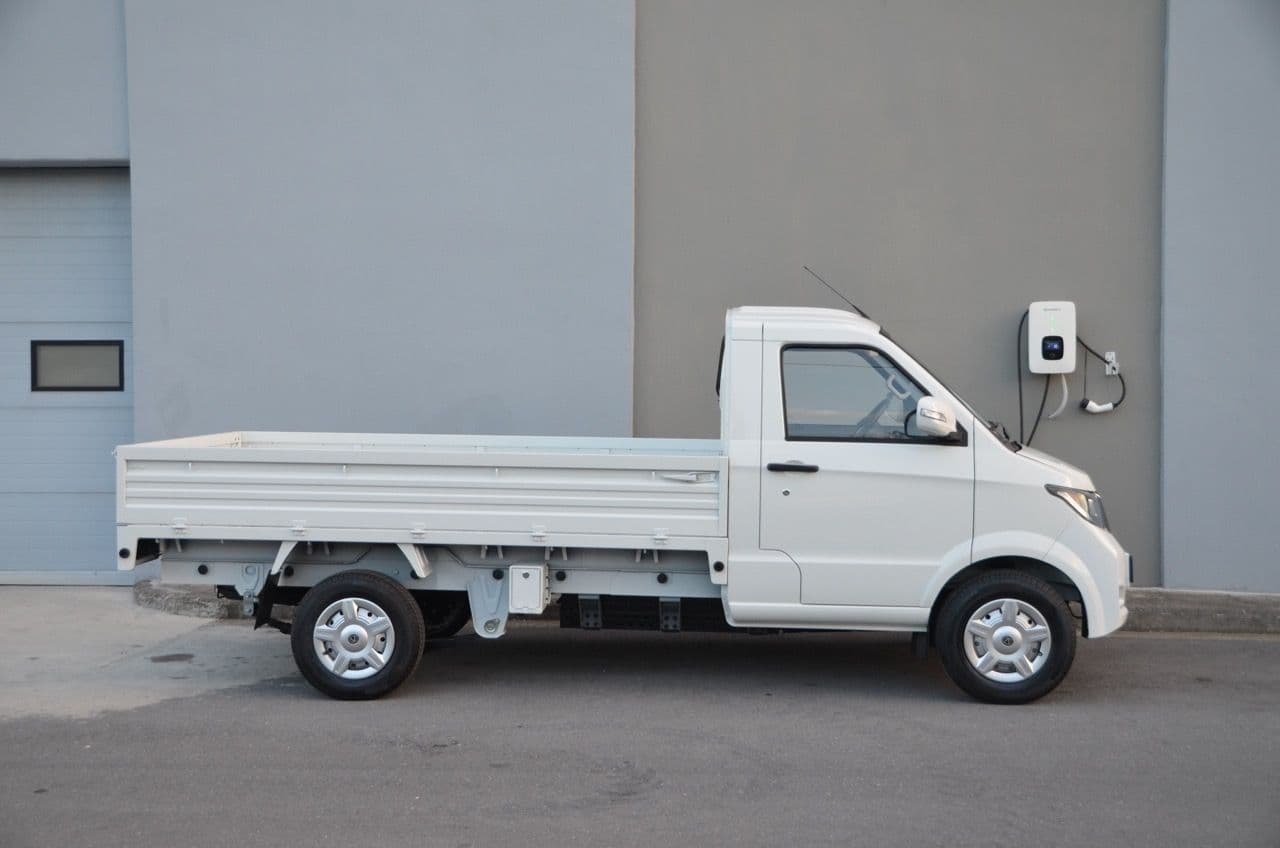
The ARI 901 is available in more than 20 variants, ranging from an open flatbed to a refrigerated vehicle. ARI Motors builds the bodies in-house, enabling solutions tailored to each application, including special builds made to customer requirements. Businesses therefore do not have to settle for a standard body that only roughly fits their needs. Available bodies and options include:
- Flatbed
- Flatbed with tarpaulin
- Tipper
- Double cab
- Refrigerated vehicle as a panel van or box body
- Box body (also available with a tail lift)
To find out which ARI 901 version and charging method are right for your business, speak to us or arrange a test drive. You can find an overview of all models under ARI Motors' electric utility vehicles; configuration and appointment booking are available on the ARI Motors website.
You might also be interested in