November 24, 2026
Croatia’s 2026 EV Subsidy: Up to €9,000 for Cars and €2,500 for Light Electric Vehicles
Croatia is stepping up its support for electric mobility. The Croatian Environmental Protection and Energy Efficiency Fund (Fond za zaštitu okoliša i energetsku učinkovitost, or FZOEU) has launched a new programme for private individuals to subsidise the purchase of new electric cars and light electric vehicles. A total of €20 million is available, which the fund says should cover around 3,000 applications. If demand exceeds the budget, the fund intends to provide additional funds.
The application launch was originally planned for 28 October and was postponed to 5 November 2026 at 9 a.m. to give applicants more time to prepare. Applications are now open. Here is an overview of the grant amounts, eligibility and how to apply.
How much is the electric-car grant in Croatia?
Unlike previous rounds, the grant is now based on the vehicle’s gross purchase price, including VAT. Electric cars priced up to €35,000 gross can receive up to €9,000. For vehicles priced between €35,000 and €62,500, the maximum falls to €7,000. Vehicles costing more than €62,500 are not eligible.
There is also a percentage cap: the grant can cover no more than 40% of the gross purchase price. To receive the full €9,000, for example, a vehicle must cost at least €22,500 gross. For less expensive models, the 40% rule determines the amount of the grant.
| Vehicle category | Gross purchase price | Maximum grant |
|---|---|---|
| Electric car (M1) | Up to €35,000 | €9,000, capped at 40% of the price |
| Electric car (M1) | €35,000 to €62,500 | €7,000, capped at 40% of the price |
| Electric car (M1) | Over €62,500 | Not eligible |
| L1e to L7e light vehicles | Up to €35,000 | €2,500, capped at 40% of the price |
Grants for L1e to L7e light electric vehicles
The programme is especially interesting for people who do not need a conventional car. It also supports electric L-category vehicles, including mopeds, motorcycles and three- or four-wheeled light vehicles. The grant is up to €2,500, again capped at 40% of the gross purchase price. Eligible light vehicles may cost no more than €35,000. Buyers need to spend at least €6,250 gross to receive the full amount.
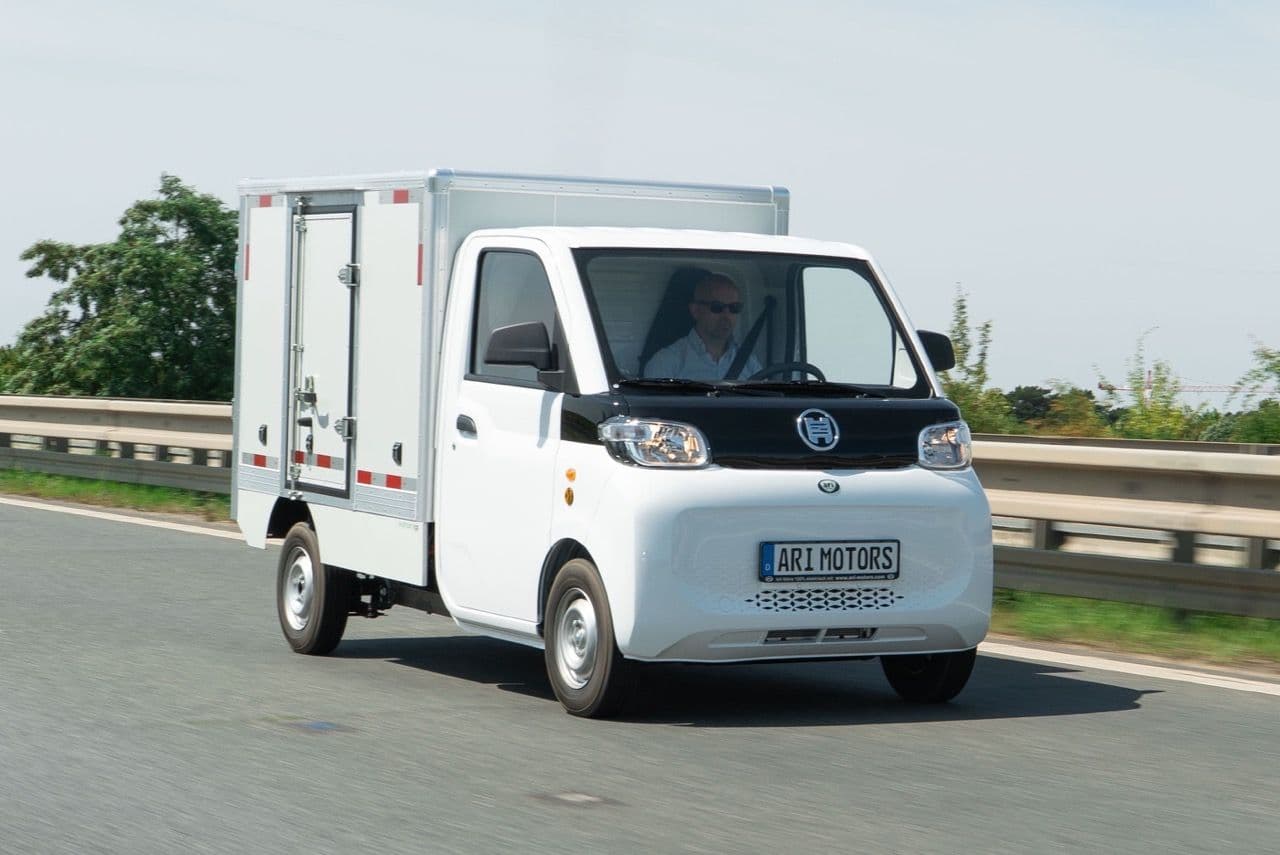
The L categories include L6e light quadricycles, which in some countries can be driven with a moped licence, and heavier L7e light vehicles. At ARI Motors, the ARI 452 is an L6e model, while the ARI Bruni, ARI 802 and ARI 458 Pro are L7e models. These compact electric vehicles can be an economical alternative to a passenger car for city trips, narrow old-town streets and short delivery routes.
Who can apply?
The current programme is exclusively for private individuals residing in Croatia. Companies are not eligible under this call. Each person may submit one application. The fund also expressly asks multiple members of the same household not to submit separate applications for the same vehicle, as interest is exceptionally high.
Cash purchases and financial leasing are eligible. Operating leases are not. One important point when planning a purchase: the vehicle must not have been paid for before the official programme start. A deposit is permitted if it was paid in 2026.
Plug-in hybrids are out; home chargers are included
Two changes from earlier programmes stand out. Plug-in hybrids are no longer eligible. In the 2024 round, buyers could still receive up to €5,000 for them. The new programme, by contrast, also allows support for the purchase and installation of a private charging station at the applicant’s home. Croatia is therefore focusing on fully battery-electric vehicles and home-charging infrastructure.
How to apply
Applications are submitted entirely online, directly through the fund’s eFZOEU platform rather than through dealerships. Applicants identify themselves using Croatia’s national electronic identification system, NIAS. Three documents must be attached: a binding dealer offer stating the manufacturer, model, drive type and vehicle class; proof of residence issued no more than 30 days earlier; and a signed declaration.
Applications are processed in the order they are received. The fund recommends setting up digital access in advance, as previous programmes were sometimes fully subscribed within hours. The FZOEU publishes the full terms and required documents on its website.
Context: Croatia has supported e-mobility for years
This programme is part of a series of funding calls. The FZOEU has so far invested around €63 million in the purchase of approximately 11,000 energy-efficient vehicles from national funds, including electric and plug-in cars, electric mopeds and vehicles for goods transport.
In 2025, businesses had a separate €21.2 million programme funded through the EU’s NextGenerationEU recovery instrument. Companies could receive up to €2,500 per L-category vehicle and up to €9,000 for M1 passenger cars and N1 light commercial vehicles, with a maximum of €90,000 per company. Taxi, delivery and car-sharing operators are supported through a separate call by the Ministry of Environmental Protection and Green Transition, which also offers up to €9,000 per vehicle.
What about Germany?
Switching to an electric vehicle can also make financial sense in Germany. Owners of electric vehicles can sell their greenhouse-gas reduction quota (THG quota) each year and receive an additional premium. Commercial buyers can also benefit until the end of 2027 from a special depreciation allowance of 75%, which, according to Germany’s Federal Ministry of Finance, also applies to used electric vehicles.
Want to see which electric light or commercial vehicle suits your needs? Configure your preferred model on its page: ARI 452, ARI Bruni, ARI 802 or ARI 458 Pro.
Sources: Fond za zaštitu okoliša i energetsku učinkovitost (FZOEU), LEVA-EU, electrive.com, Novi list and Croatia Week. As of 23 November 2026.
You might also be interested in