October 28, 2026
Electric Compact Vans for Tradespeople: 10 Providers in Germany at a Glance
Tools, materials, spare parts and frequent short trips with plenty of stops: the typical tradesperson’s driving profile is well suited to electric drive. The figures reflect this. According to Dataforce, new registrations of electric vans in German fleets rose by 43.7 per cent from January to August 2026, and their share has now reached 15.2 per cent.
The choice is wider than ever, but so are the differences. A high-roof combi for an electrician has little in common with a tipper for landscaping work. Here are ten providers and the applications their models are best suited to.
1. ARI Motors: compact vans with more than 30 body options
Models for tradespeople: ARI 458 Pro, ARI 901
Vehicle types: compact flatbed, tipper and box-body vans
Particularly suited to: landscaping, roofing, painting, property maintenance and businesses with frequent city driving
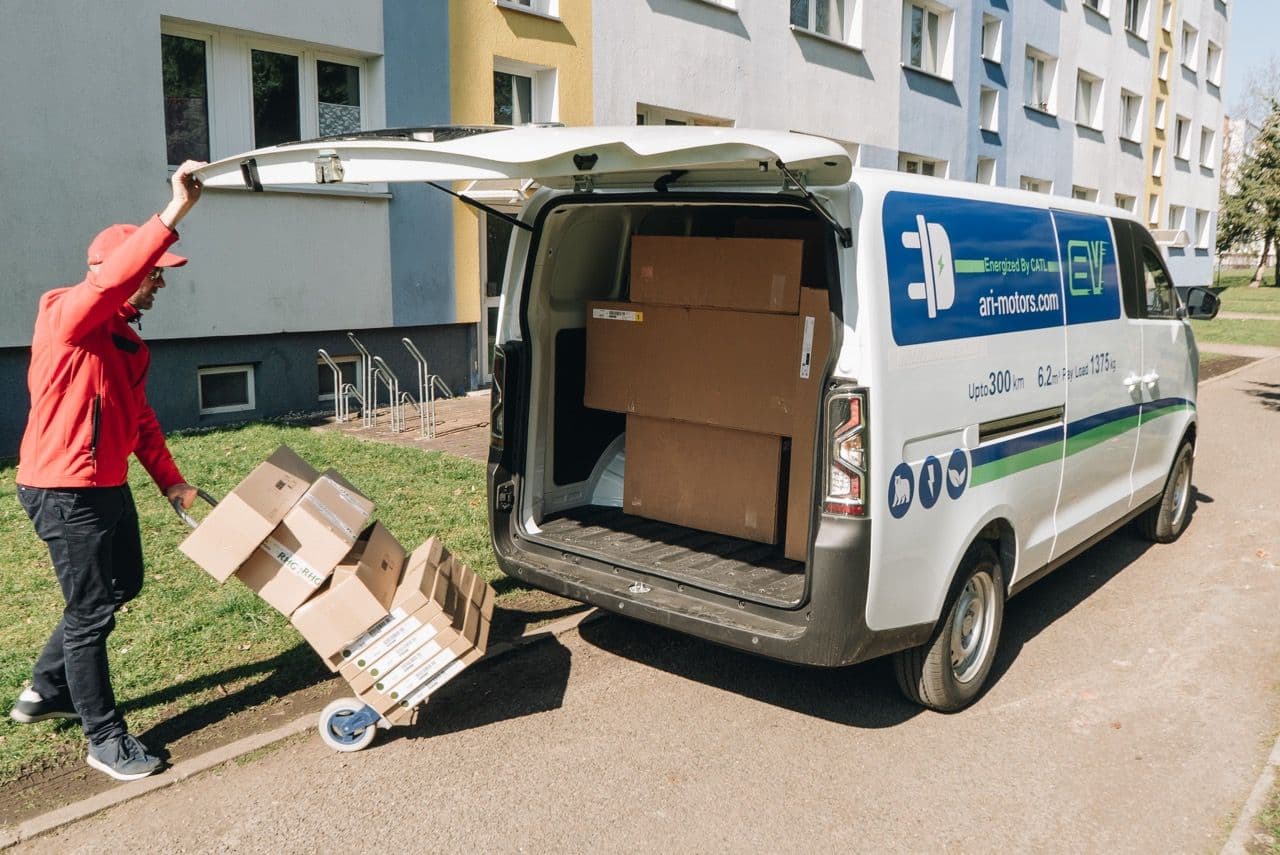
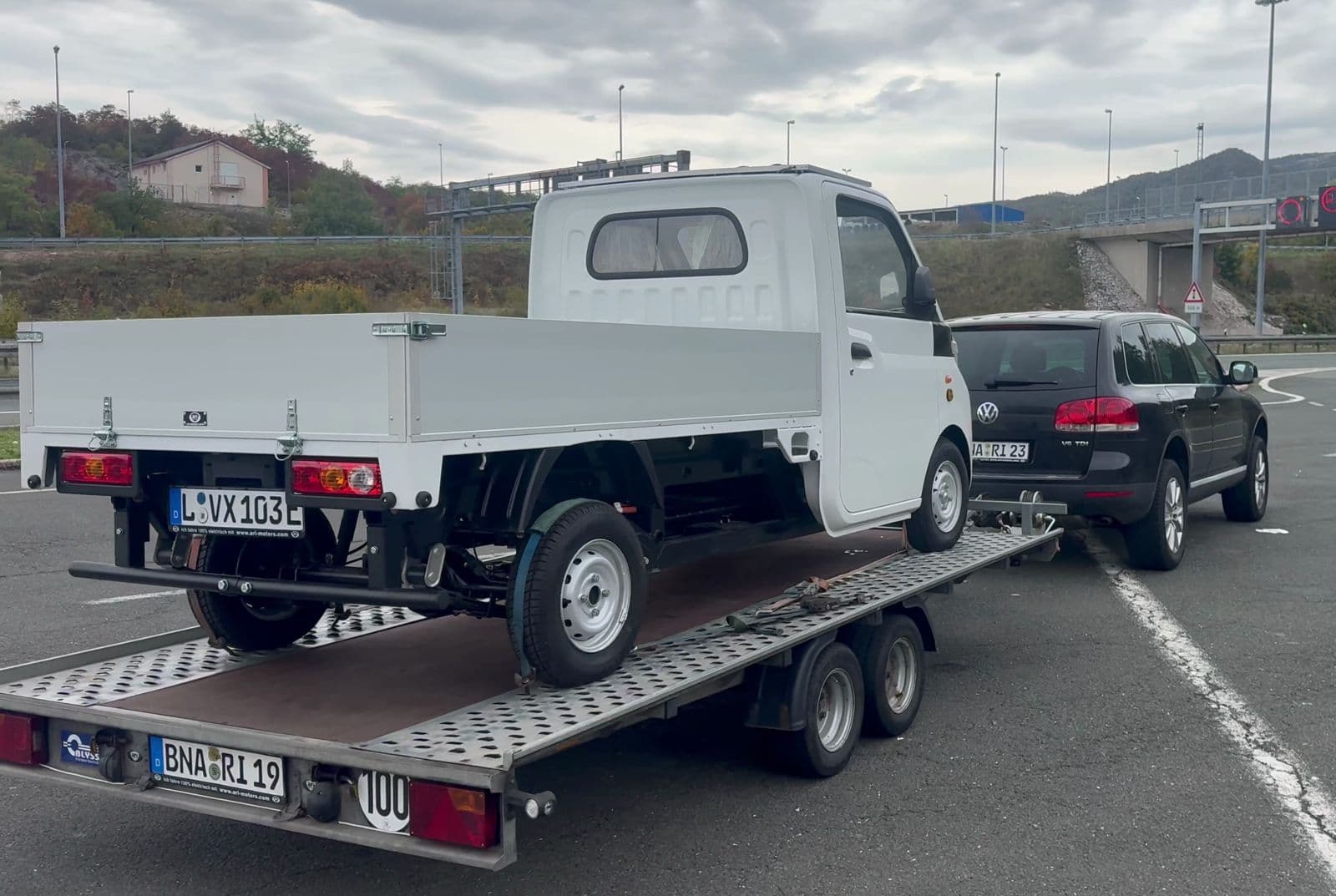
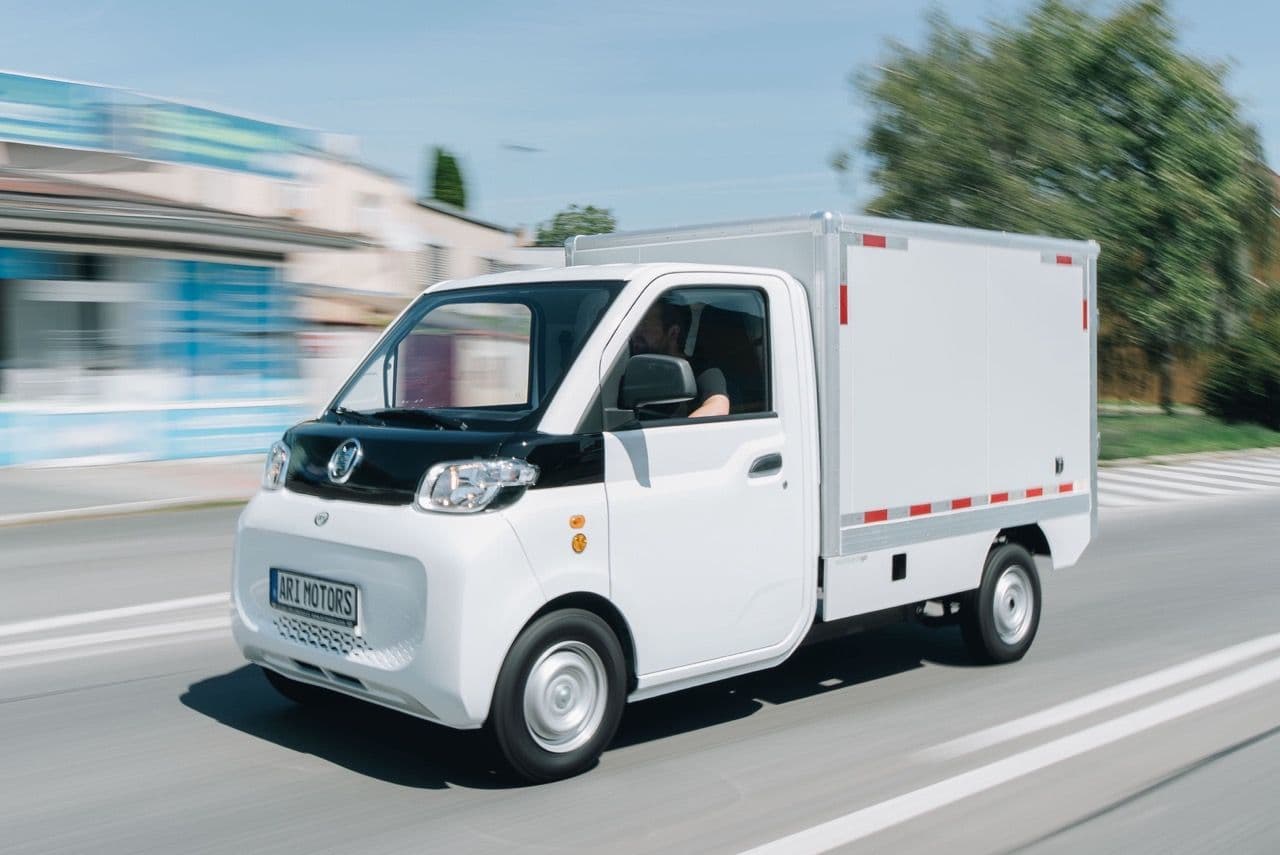
Based in Borna near Leipzig, ARI Motors uses compact base vehicles from established partners and builds highly customised bodies, including special conversions to customer requirements. The ARI 458 Pro is especially interesting for tradespeople. This L7e-class light vehicle offers a payload of up to 850 kilograms and more than 30 body variants, including a flatbed, a flatbed with tarpaulin, a tipper and a box body.
With its standard LiFePO4 battery, the ARI 458 Pro has a range of 120 to 180 kilometres; the optional larger battery provides up to 230 kilometres. At an electricity price of 30 cents per kilowatt-hour, energy costs are around €3.96 per 100 kilometres. Prices start at around €15,790 net. For more space, the larger ARI 901 offers around 900 kilograms of payload, up to 7.6 cubic metres of load volume and a range of roughly 235 to 250 kilometres depending on the body. Test drives take place at your premises, and servicing can be handled by your regular workshop or through the service partner network.
2. Ford: the E-Transit Courier as a compact entry point
Models for tradespeople: E-Transit Courier, E-Transit Custom, E-Transit
Vehicle types: high-roof combi and panel van
Particularly suited to: service technicians, electricians and installers who do a lot of interurban driving
Ford is represented across all sizes of the electric van market. For tradespeople looking for a compact, enclosed load space, the E-Transit Courier is a good fit. From January to August 2026, it recorded 912 new registrations in German fleets, placing it among the country’s ten most-registered electric vans. With the E-Transit Custom in second place in the statistics and the larger E-Transit, Ford also covers the classes above.
3. Mercedes-Benz: eCitan backed by a premium service network
Models for tradespeople: eCitan, eVito, eSprinter
Vehicle types: high-roof combi and panel van
Particularly suited to: businesses that value an extensive service network and a consistent fleet
The Mercedes-Benz eCitan is closely related technically to the Renault Kangoo. In the first eight months of 2026, it recorded 1,072 new registrations in German fleets. Like Ford, Mercedes has three model lines among the top ten. Businesses seeking a consistent fleet can choose the larger eVito and eSprinter from the same manufacturer.
4. Renault: the Kangoo E-Tech, a pioneer in its class
Models for tradespeople: Kangoo E-Tech, Trafic E-Tech, Master E-Tech
Vehicle types: high-roof combi and panel van
Particularly suited to: tradespeople looking for a proven high-roof combi and a broad dealer network
Renault has one of the longest track records in electric commercial vehicles; the Kangoo was one of the first electric high-roof combis. The current Kangoo E-Tech uses a dedicated platform. In the coming years, Renault also plans a new generation of vans with the Flexis joint venture; more on that below.
5. Stellantis: four sibling models from Citroën, Opel, Peugeot and Fiat
Models for tradespeople: Citroën ë-Berlingo, Opel Combo Electric, Peugeot e-Partner, Fiat E-Doblò
Vehicle type: high-roof combi
Particularly suited to: businesses choosing on price, terms and proximity to a dealer
The Stellantis Group offers four high-roof combis that share a platform and powertrain. The main differences are design, equipment and dealer networks. That gives buyers a practical advantage: you can compare brands for the best deal and the nearest workshop without compromising on the underlying technology.
6. Toyota: Proace City Electric with Stellantis technology
Models for tradespeople: Proace City Electric, Proace Electric
Vehicle types: high-roof combi and panel van
Particularly suited to: businesses that already operate a Toyota fleet
The Toyota Proace City Electric is based on the same platform as the Stellantis models. With 718 new registrations from January to August 2026, it placed tenth in the Dataforce statistics and, according to Dataforce, is Toyota’s best-selling van among fleet customers. Toyota also offers special versions of the larger Proace Electric for commercial use.
7. Volkswagen: the ID. Buzz Cargo leads the market
Models for tradespeople: ID. Buzz Cargo, e-Transporter
Vehicle type: medium-sized panel van
Particularly suited to: businesses needing more volume and longer-distance capability
The VW ID. Buzz topped the electric van ranking from January to August 2026 with 3,908 new registrations. Volkswagen also made a big leap with the new e-Transporter: 2,630 registrations lifted it from 16th to fourth place. Both models are noticeably larger than classic high-roof combis and are best suited to operations that regularly move large loads.
8. Kia: the PV5 Cargo enters the market
Model for tradespeople: PV5 Cargo
Vehicle type: medium-sized panel van
Particularly suited to: businesses looking for an alternative to the ID. Buzz Cargo
With the PV5 Cargo, Kia has entered the commercial vehicle market for the first time—and made a strong start. From January to August 2026, it achieved 1,085 new registrations in German fleets, immediately placing sixth. The long version, just under 4.70 metres in length, offers 4.4 cubic metres of load space. In Germany, the PV5 Cargo is sold through a dedicated specialist dealer network. Kia has announced further body styles, including a chassis cab for conversions.
9. Goupil: French specialist in compact work vehicles
Models for tradespeople: G4, G6
Vehicle types: compact flatbed, tipper and box-body vehicles
Particularly suited to: municipal service providers, landscaping and urban logistics
Goupil is part of the US Polaris group. In Germany, its vehicles are distributed by general importer Iseki and its specialist dealer network, which also handles service and spare parts. The compact G4 is available with a flatbed, tipper, box body or refrigerated body. The larger G6 is registered as an N1 vehicle, measures around 4.80 metres long and 1.70 metres wide, and reaches speeds of up to 80 km/h. At launch, it was offered as a box vehicle with a 900-kilogram payload and as a hook-lift tipper.
10. Alkè: robust work vehicles from Italy
Model range for tradespeople: ATX series
Vehicle type: compact work vehicle with a flatbed, tipper or special body
Particularly suited to: heavy-duty work on company premises, in parks and in municipal services
Based in Padua, Alkè builds especially robust N1-approved electric commercial vehicles in its ATX series. The manufacturer states a payload capacity of up to 1,630 kilograms and a range of up to 200 kilometres. The vehicles are designed for low speeds and heavy loads, and come into their own where space is tight but loads are heavy.
On the horizon: more providers are set to arrive
Flexis, a joint venture between Renault, the Volvo Group and logistics company CMA CGM, is developing a new generation of electric vans on an 800-volt platform. They will be built at Renault’s Sandouville plant, with Renault Trucks taking over sales from 2027. Renault itself will offer the vehicles under the names Trafic, Goelette and Estafette. Their focus is urban parcel logistics rather than the traditional trades market. Kia also plans to expand its PV family with the smaller PV1 and larger PV7.
How to choose the right vehicle for your business
The right choice depends less on the badge than on your day-to-day work. Track your journeys for a few weeks: how many kilometres do you cover per day, how heavy is a typical load, and how often do you use motorways?
When comparing payload figures, check whether they refer to the bare chassis without a body. After adding the body, shelving and driver, considerably less payload may remain. Body style is one of the biggest differences between vehicle classes: high-roof combis are almost exclusively enclosed vans, while specialist manufacturers offer flatbeds, tippers and bespoke factory-built solutions.
For range, pay attention to winter performance: cold weather, heating and a full load can noticeably reduce the distance available. If vehicles are parked at the depot overnight, a wallbox is often enough; smaller models may even charge from a household socket. For servicing, establish in advance who will maintain the vehicle and how quickly spare parts can be supplied. The market has also seen companies leave: StreetScooter ended production, and Munich-based manufacturer Evum Motors became insolvent in 2025.
Costs and incentives
Battery-electric vehicles are exempt from vehicle tax in Germany, and you can also apply for the GHG quota payment for your vehicle each year. The special depreciation allowance is particularly attractive to business buyers: for company electric vehicles acquired after 30 June 2025 and before 1 January 2028, 75 per cent of the purchase cost can be depreciated in the first year. According to the Federal Ministry of Finance, this also applies to used electric vehicles.
Individual federal states and municipalities offer additional programmes. See our overview of funding available for ARI Motors electric vehicles in Germany. Discuss how the rules apply to your specific situation with your tax adviser.
Conclusion: start with the job, then choose the brand
Tradespeople now have a genuine choice of electric compact vans. If you drive long distances and need an enclosed load space with shelving, high-roof combis from Ford, Mercedes-Benz, Renault, Stellantis or Toyota may suit you. For greater volume, consider the ID. Buzz Cargo or Kia PV5. If most journeys are local, manoeuvring space is limited and you need a flatbed, tipper or bespoke body, specialists such as ARI Motors, Goupil and Alkè may be a better fit—often with a considerably lower entry price.
Would you like to find out whether the ARI 458 Pro or ARI 901 is right for your business? Arrange a free test drive at your premises and try the vehicle where it will do its work.
You might also be interested in